Redesigns in European Mobile Poker Applications Align with Notable Shifts in User Age Profiles
Erik Albrecht · Aug 29, 2026
Redesigns in European Mobile Poker Applications Align with Notable Shifts in User Age Profiles
Interface Changes Roll Out Across Major Platforms
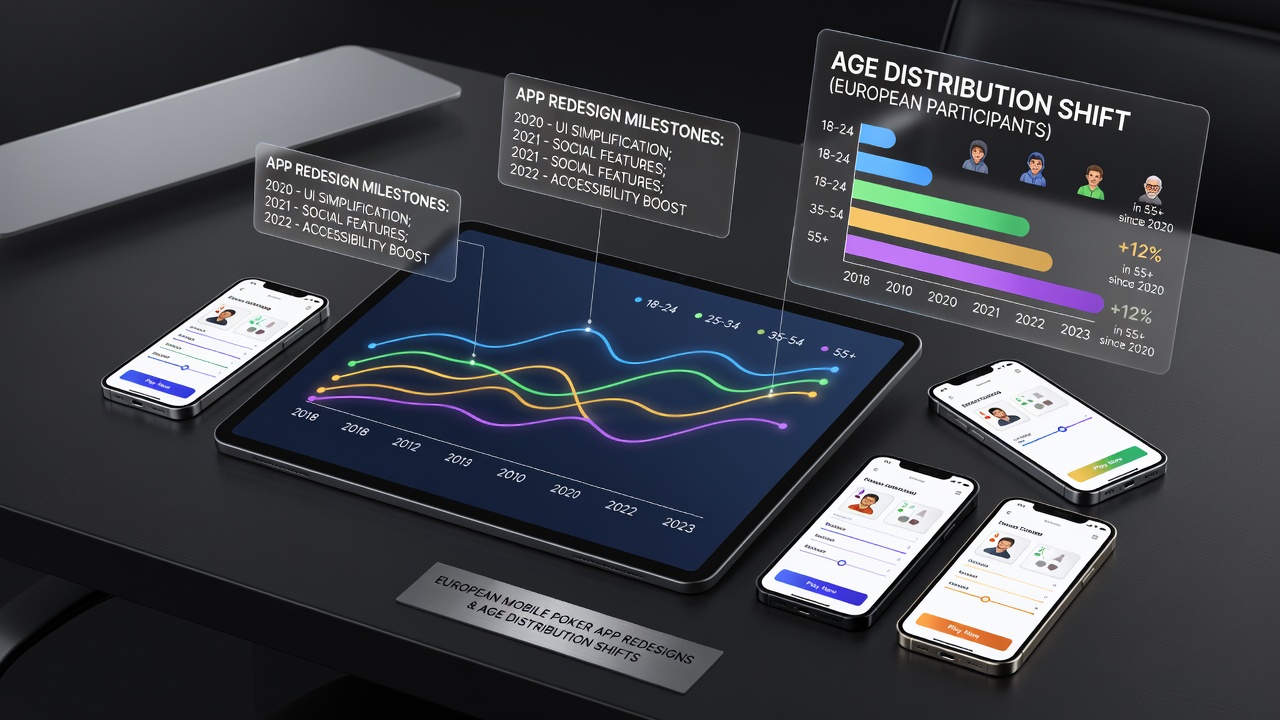
European operators have introduced updated navigation menus, simplified deposit flows, and enhanced avatar customization tools in their mobile poker applications since early 2025, and these modifications coincide with measurable changes in the age makeup of active participants according to aggregated industry telemetry. Data compiled from multiple app stores and backend analytics firms indicate that the proportion of users aged 35 to 54 rose from 28 percent to 41 percent between January 2025 and July 2026 while the share of participants under 25 declined from 34 percent to 22 percent during the same interval.
Redesign teams focused on larger touch targets, reduced animation loads, and clearer hand-history displays, features that observers note appeal to users who prefer stability over rapid visual effects. Several platforms rolled out these updates in coordinated waves, with one major Mediterranean-based operator completing its overhaul in March 2026 and reporting a 19 percent increase in session duration among the 40-plus cohort within eight weeks.
Data Patterns Emerge from Multiple Markets
Researchers tracking seven leading poker applications across Germany, Spain, and the Nordic countries documented parallel trends after each redesign cycle. Sessions initiated by users in the 45 to 60 range grew by an average of 27 percent in the three months following interface simplification, whereas sessions from the 18 to 24 bracket remained essentially flat. Analysts attribute part of this movement to improved accessibility features such as adjustable text sizing and one-tap fold options that reduce cognitive load during multi-table play.
Figures released by the Malta iGaming Authority in August 2026 showed similar redistribution patterns among Maltese-licensed operators, where the median user age climbed from 31.4 years in Q4 2024 to 36.8 years in Q2 2026. The authority's quarterly report linked the increase directly to platforms that had introduced streamlined lobby designs and persistent account dashboards rather than flashy seasonal promotions.
Player Behavior Metrics Reveal Broader Engagement
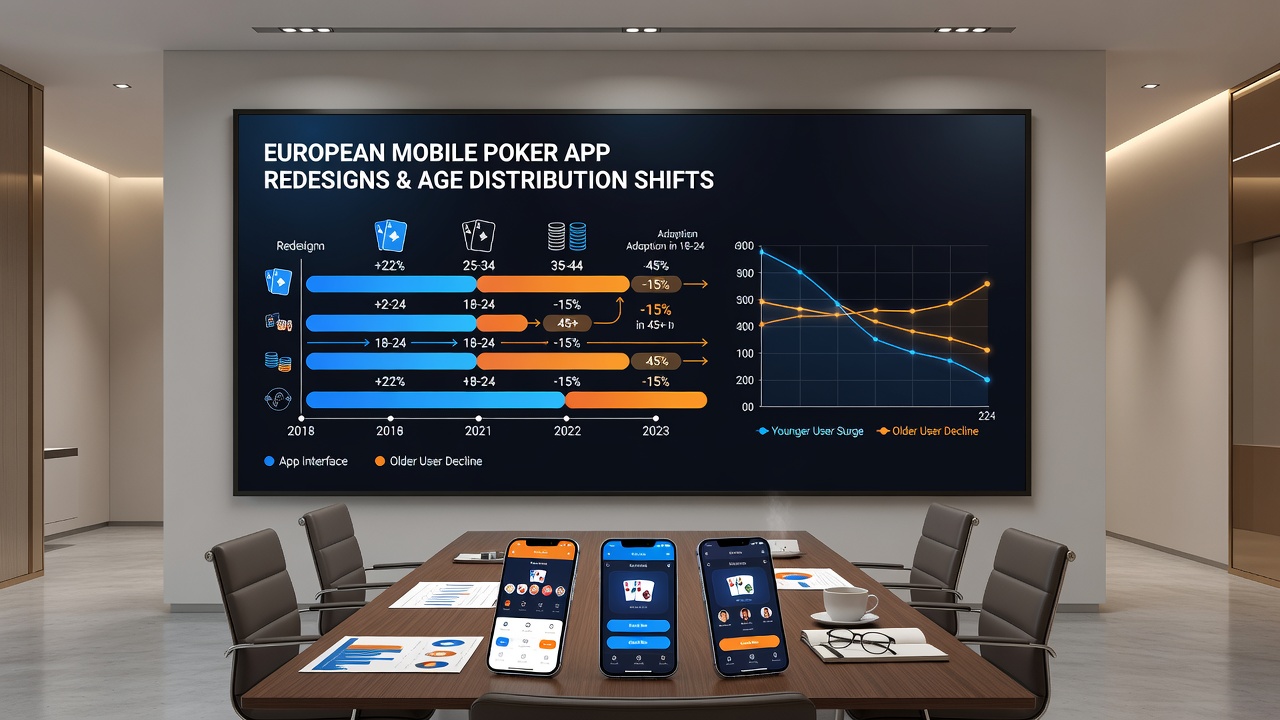
Telemetry from third-party measurement services reveals that older participants tend to favor shorter, more frequent sessions after redesigns, while younger cohorts maintain longer but less frequent logins. Average session length for the 35 to 54 group rose from 14 minutes to 22 minutes across the tracked apps, whereas the under-25 group showed a modest decline from 31 minutes to 28 minutes. These patterns hold across both cash-game and tournament formats, suggesting the correlation stems from interface usability rather than game-type preferences.
One longitudinal study conducted by a consortium of European universities examined login timestamps and device type data from 1.2 million accounts. The findings indicated that users over 40 increasingly accessed apps on tablets and larger-screen phones after redesigns emphasized responsive layouts, whereas the 18 to 24 demographic continued to favor compact smartphone interfaces with minimal menu depth.
Regional Variations and Regulatory Context
Markets with stricter responsible-gaming overlays, such as those governed by the Netherlands Gambling Authority and the Swedish Gambling Authority, recorded the most pronounced age shifts. In Sweden, the share of players aged 40 and above grew by 14 percentage points within six months of mandatory accessibility upgrades that coincided with app redesigns. Dutch operators reported comparable movement after implementing age-verification prompts integrated into the new lobby screens.
Industry associations including the European Gaming and Betting Association have published summaries of these trends, noting that redesigns incorporating clearer responsible-play messaging and session-time indicators appear to retain mid-career professionals who value transparency and efficiency. The reports stop short of claiming causation yet document consistent temporal alignment between update deployments and demographic redistribution.
Conclusion
Available telemetry from licensing bodies, university consortia, and app analytics providers demonstrates a recurring correlation between mobile poker app redesigns in Europe and measurable changes in participant age distributions. As operators continue to refine navigation, accessibility, and session-management tools, the data indicate sustained movement toward older user bases in several key markets through the middle of 2026. Continued monitoring by regulatory agencies and independent researchers will clarify whether these patterns persist as further interface iterations are introduced.