Evolving Payment Gateways Prompt Stake Adjustments in Interstate Digital Card Gaming Platforms
Gisela Jung · Oct 24, 2026
Evolving Payment Gateways Prompt Stake Adjustments in Interstate Digital Card Gaming Platforms
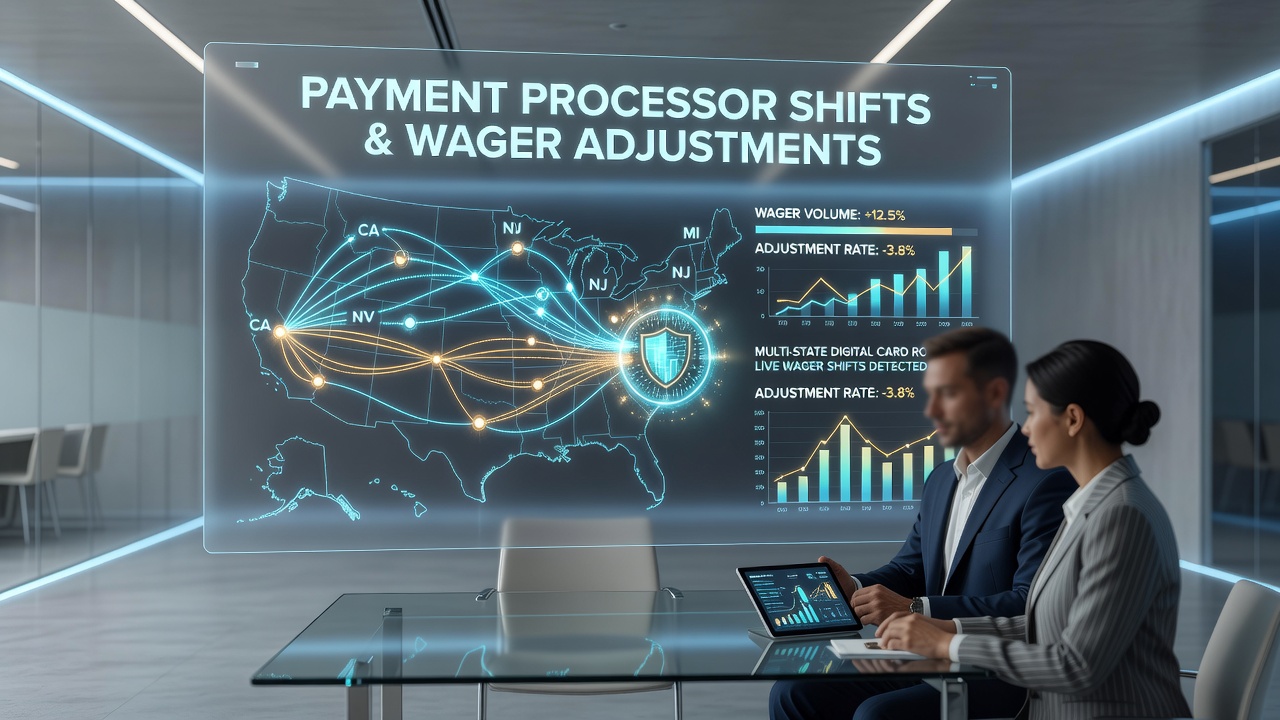
Payment processor transitions have begun reshaping minimum and maximum wager structures in multi-state digital card rooms, with operators responding to revised transaction fees and compliance requirements that took hold during the third quarter of 2026. Data from several interstate networks indicate that average bet sizes shifted by 12 to 18 percent in rooms operating under shared liquidity agreements between New Jersey, Pennsylvania, and Michigan. These adjustments reflect direct responses to processor policies that altered settlement timelines and introduced tiered pricing based on transaction volume.
Processor Policy Changes and Their Reach
Multiple financial service providers updated their merchant agreements for gaming clients in early 2026, citing updated risk assessments and federal banking guidelines that affected how funds moved between player accounts and operator ledgers. Observers note that these updates prompted card room operators to recalibrate blind levels and tournament buy-ins to maintain margin targets while absorbing higher per-transaction costs. In October 2026, several platforms reported implementing new wager bands that aligned deposit and withdrawal flows with the revised processor schedules.
One study released by the New Jersey Division of Gaming Enforcement tracked transaction data across licensed poker rooms and found that players adjusted their session volumes in response to the new minimums, with participation in mid-stakes tables rising as lower-stakes options narrowed. The report links these patterns to processor-driven fee structures that made smaller transactions less economical for operators.
Cross-State Liquidity and Wager Alignment
Shared player pools across state lines require consistent rules for stakes, yet payment processor variations have introduced friction that forces localized tweaks. Operators managing rooms in multiple jurisdictions now maintain separate wager tables that reflect the cost profiles of each state's approved processors. Researchers at the University of Nevada, Las Vegas documented how these differences led to a 9 percent divergence in average pot sizes between New Jersey-only tables and those drawing from the multi-state pool during the same period.

Platforms responded by introducing dynamic stake options that automatically adjust based on a player's deposit method and the associated processor. This approach allows operators to balance player access with operational costs without violating interstate compact terms. Figures from Michigan's gaming regulatory body show that rooms adopting these tools experienced steadier daily handle compared with those that applied uniform changes across all tables.
Player Behavior and Table Selection Trends
Tracking data collected through October 2026 reveals that players gravitated toward tables with wager limits that matched their preferred deposit sizes after processors introduced new minimum transaction thresholds. Rooms that previously offered broad stake ranges consolidated some lower tiers, resulting in longer wait times for micro-stakes games in certain states. Industry reports indicate that high-volume players maintained consistent activity levels by shifting to mid-stakes formats where the fee impact per hand remained more predictable.
Analysts tracking session lengths across shared liquidity networks observed that average play duration increased slightly when wager adjustments aligned more closely with processor settlement speeds. These patterns emerged most clearly in rooms that coordinated changes across New Jersey, Pennsylvania, and Delaware networks during the fall months.
Regulatory Context and Future Adjustments
State regulators have monitored these developments through routine reporting requirements, with several agencies requesting additional detail on how payment processor contracts influence table structures. The changes remain within existing licensing frameworks, yet they highlight the growing interdependence between financial service providers and gaming operations that span multiple jurisdictions. Data from the Ontario Lottery and Gaming Corporation, which oversees similar cross-border considerations in Canada, offers comparative context showing parallel adjustments in wager settings when processor terms shift.
Conclusion
Payment processor shifts continue to influence wager configurations in multi-state digital card rooms as operators adapt to updated fee structures and settlement requirements. Information collected through October 2026 demonstrates measurable changes in table offerings and player distribution across networks operating under shared liquidity agreements. These developments underscore the operational links between financial infrastructure and gaming product design in an environment where multiple states coordinate regulatory oversight.